Where to live
Living in Tuscany: Cities, Coast and Countryside (2026)
By Linda MurphyFacts checked October 24, 2026
The short answer
Tuscany is Italy's second most expensive region to rent in: €20 per square meter a month on average in the third quarter of 2026 (Idealista). Florence is the outlier at €21.7; the other provincial capitals range from €9.6 in Arezzo to €15.3 in Massa. Regional trains link the main cities, while hill towns such as Montepulciano and Cortona are a bus ride from their station.
- Average asking rent
- €20 per m² a month in Tuscany; €21.7 in Florence, €9.6 in Arezzo (Idealista, Q3 2026)
- Quality of life
- Siena best in the region at 21st of 107 provinces; Pistoia 66th (Il Sole 24 Ore, 2025)
- Regional trains
- 14 main lines, 174 stations, about 775 trains on an average weekday
- Public healthcare
- 3 local health authorities (ASL); Tuscany scored 96, 94 and 90 of 100 in the Ministry of Health's 2024 assessment
- Airports
- Pisa (almost 6 million passengers in 2025) and Florence (3.8 million)
- Fiber to the home
- 68% of Tuscan households, against 77% nationally (AGCOM, January 2026)
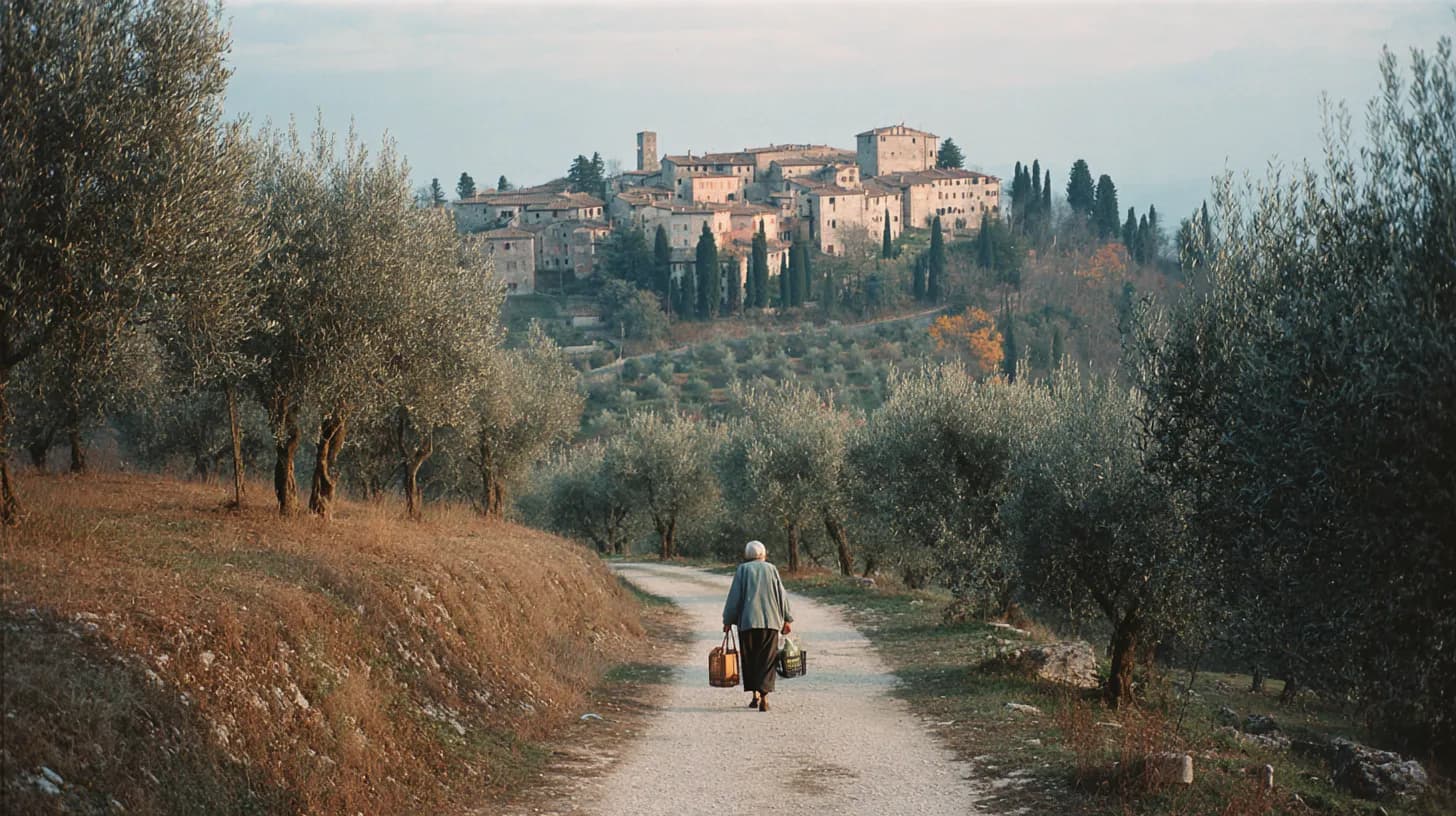
How Tuscany is organized
Tuscany's provinces are Arezzo, Florence, Grosseto, Livorno, Lucca, Massa-Carrara, Pisa, Pistoia, Prato and Siena. Florence is the regional capital.
Your province matters for paperwork. Non-EU newcomers apply for the permesso di soggiorno (residence permit) at the questura (state police headquarters) of the province where they plan to live. According to the Polizia di Stato, you have 8 working days from entry to apply.
Public healthcare is organized by area, through three local health authorities. You register with the one that covers the comune (municipality) where you live.
Where to live: cities, coast and countryside
Florence. The regional capital is Tuscany's most expensive provincial capital to rent in: €21.7 per square meter (m²) a month in the third quarter of 2026 (Idealista). Only Milan was higher. Neighborhoods, offices and local costs are in Living in Florence.
The other cities. Asking rents in the other provincial capitals ran from €9.6 per m² in Arezzo to €15.3 in Massa. Most sit on regional rail lines from Florence:
- Florence to Pisa and Livorno
- Florence to Empoli and Siena
- Florence to Pistoia, Lucca and Viareggio
- Florence to Arezzo and Chiusi
- Pisa to Livorno and Grosseto, along the southern coast
Prato is on the line from Florence toward Bologna. Lucca also connects directly to Pisa.
The coast. Livorno is in the top 10 of Il Sole 24 Ore's climate index, a ranking of provincial capitals by 15 weather indicators. Its asking rents rose 11.9% in the third quarter of 2026, to a record. Elba is reached by regional train to Piombino Marittima, then ferry.
Province averages on the coast can mislead. The province of Lucca, which includes the Versilia coast, averaged €46 per m², the highest in Italy. The city of Lucca averaged €11.3. The province of Grosseto averaged €21.1, against €10.0 in the city.
The countryside. Several well-known hill towns are a bus ride from their station. Trenitalia's own route pages send you on by bus to the center of San Gimignano (from Poggibonsi station), Montepulciano and Cortona.
Stations also thin out in rural areas. Around Florence there is one about every 3 km of line; between Arezzo and Chiusi, one every 16 km.
What housing costs across Tuscany
Tuscany's average asking rent was €20 per m² a month in the third quarter of 2026, according to Idealista. Only Valle d'Aosta was higher, and the national average was €14.6. The regional figure fell 3.7% from the previous quarter.
€/m² per month
Average asking rents in listings in each provincial capital, excluding seasonal and holiday rentals. Tuscany's regional average: €20.
Source: idealista/data, average rent by provincial capital, third quarter of 2026 (published October 1, 2026)
At those averages, a 70 m² apartment would ask about €1,519 a month in Florence, €945 in Pisa and €672 in Arezzo. These are simple multiplications, a starting point for a budget rather than a quote.
Three things to know about these numbers:
- They are asking rents. Idealista measures what landlords request in listings, and excludes seasonal and holiday rentals.
- City and province figures differ. Province averages include resort towns. The newspaper La Nazione attributes much of Lucca's provincial figure to Versilia.
- Some cities are at record highs. Livorno, Carrara and Pistoia all reached their highest asking rents since Idealista's series began.
Buying follows the same map. Idealista put Florence's average asking price for existing homes at €4,800 per m² in the third quarter of 2026, against a national €2,031. The province of Lucca, at €3,859, was the third most expensive province in Italy, after Bolzano and Milan.
| Cost | Amount | Source and date |
|---|---|---|
| 70 m² at Florence's average asking rent | About €1,519 a month | Idealista, Q3 2026 |
| 70 m² at Pisa's average asking rent | About €945 a month | Idealista, Q3 2026 |
| 70 m² at Arezzo's average asking rent | About €672 a month | Idealista, Q3 2026 |
| Regional train, single ticket up to 10 km | €1.60 | Regione Toscana, December 2025 |
| Regional train, monthly pass up to 10 km | €39.60, or €33.40 with an ISEE (household means indicator) under €36,151.98 | Regione Toscana, December 2025 |
| PisaMover, Pisa Centrale to the airport | €6.50 one way, added to the train fare | Trenitalia, October 2026 |
| Voluntary enrollment in the national health service | At least €2,000 a year | D.Lgs. 286/1998, art. 34 |
For leases and searches, see Renting in Italy and Apartments for Rent in Florence.
How Tuscan provinces rank for quality of life
The newspaper Il Sole 24 Ore ranks all 107 Italian provinces each year on 90 indicators. In its 2025 edition, published December 1, 2025, no Tuscan province reached the top 20. Siena led the region in 21st place.
| Province | Quality of life rank, 2025 (of 107) | Households reached by fiber (FTTH), January 2026 |
|---|---|---|
| Siena | 21 | 65% |
| Pisa | 29 | 65% |
| Florence | 36 | 78% |
| Prato | 38 | 91% |
| Arezzo | 44 | 58% |
| Livorno | 49 | 54% |
| Lucca | 58 | 58% |
| Grosseto | 59 | 75% |
| Massa-Carrara | 64 | 74% |
| Pistoia | 66 | 56% |
Sources: Il Sole 24 Ore (as reported by La Nazione) and AGCOM, Italy's communications regulator. Both figures cover whole provinces, so a single town can differ from its province's figure. For how Tuscany compares with other regions, see Best Places to Live in Italy.
Getting around: trains, buses and a car
Trenitalia runs regional trains on 14 main lines under a contract with the Region. The network has 174 stations and stops, and the contract plans about 775 trains on an average weekday. A separate operator, Trasporto Ferroviario Toscano (TFT), runs the Arezzo to Stia and Arezzo to Sinalunga lines.
Speed varies by line. The Region puts the average commercial speed at about 60 km/h, and about 45 km/h on the Lucca to Aulla line. Of 1,479 km of national network in Tuscany, 503 km is not electrified and 685 km is single-track.
Service is not always complete. In 2024, 2.8% of the scheduled train-kilometers were not run, for causes inside or outside the company, according to the Region's 2025 review.
Buses fill the gaps. Autolinee Toscane has run local bus service across the region since November 1, 2021: more than 950 lines, 2,600 buses and 37,000 stops. Pegaso tickets and passes combine train, bus and ferry across the region.
The car question comes down to where you live. Getting by in the Tuscan countryside without a car is a recurring question on Reddit's Tuscany forum, from visitors and newcomers alike. Posters ask whether buses, trains and taxis can stand in for a car.
Before you rent outside a town, look up the bus timetable for that exact village on the Autolinee Toscane website. If you will not drive, choose a town on one of the main rail lines. For licenses and traffic zones, see Driving in Italy and ZTL Zones in Italy. Train tickets are covered in Trains in Italy.
Healthcare: Tuscany's three ASLs
A regional law of 2015 merged Tuscany's 12 local health units into 3 ASLs (aziende sanitarie locali, local health authorities). They have operated since January 1, 2016.
| ASL | Formed from the former units of | University hospital (azienda ospedaliero-universitaria) in its area |
|---|---|---|
| Toscana nord ovest | Massa-Carrara, Lucca, Pisa, Livorno and Viareggio | Azienda ospedaliero-universitaria Pisana |
| Toscana centro | Florence, Empoli, Prato and Pistoia | Azienda ospedaliero-universitaria Careggi |
| Toscana sud est | Arezzo, Siena and Grosseto | Azienda ospedaliero-universitaria Senese |
Toscana nord ovest serves more than 1.2 million residents, and Toscana centro about 1.5 million registered patients. Once you enroll in the Servizio Sanitario Nazionale (national health service), national law assigns you to the ASL of the comune where you live.
The Ministry of Health scores each region yearly on prevention, community care and hospital care. Each area runs from 0 to 100, with 60 as the pass mark. In the 2024 results, published July 10, 2026, Tuscany scored 96, 94 and 90. That 280 of 300, as totaled by the news agency AGI, placed it third after Veneto and Emilia-Romagna.
These are regional averages for the public system. They do not rate individual hospitals. Enrollment steps are in Registering With the SSN.
Climate
Il Sole 24 Ore's climate index, published March 9, 2026, averages weather data from 2015 to 2025. Coastal places fill most of its top 10, including Livorno. Florence ranks 78th, in the second half of the table.
The index credits sea breezes with softening summer heat peaks in coastal cities. Inland, ask about air conditioning and shutters when you view a home.
Airports: Pisa and Florence
Pisa (Galileo Galilei). Almost 6 million passengers in 2025, a record. Its main routes were London, Tirana, Palermo, Catania and Brussels. The PisaMover shuttle leaves Pisa Centrale station every 5 or 15 minutes, 6:00 a.m. to midnight. It costs €6.50 on top of your train ticket. Daily buses link the airport with Florence, Prato, Pistoia, Viareggio, Pietrasanta, Montecatini and Lucca.
Florence (Amerigo Vespucci). 3.8 million passengers in 2025, also a record. Its main routes were Paris, London, Amsterdam, Barcelona and Munich. The T2 tram links it with the center. Riders heading there can get off at Valfonda, Alamanni or Fortezza, near Santa Maria Novella station (Comune di Firenze, January 2025).
Internet outside the cities
Fiber to the home reached 68% of Tuscan households in AGCOM's January 8, 2026 survey, against 77% nationally. Tuscany ranked 16th of 20 regions. Coverage ran from 91% of households in the province of Prato to 54% in the province of Livorno.
Remote workers looking at rural homes in Italy repeatedly ask on Reddit whether the connection will be good enough for remote work. Check the exact address before you sign:
- Open AGCOM's Broadband Map (maps.agcom.it) and enter the address. It shows the fixed, wireless and mobile technologies available there and their performance.
- Ask the provider. Under Law 50 of April 20, 2026, providers must tell you before the contract which technologies reach your address, based on the same map.
- If fiber is not there, compare fixed wireless access (FWA, internet by radio link), which has its own map on the same site.
More on providers and contracts in Home Internet in Italy.
Common problems and fixes
A country house with no practical bus. Check the Autolinee Toscane timetable for the village. Test the trip to the nearest station before you sign. If the answer is a taxi, budget for a car.
No fiber at the farmhouse. Look the address up on AGCOM's Broadband Map. Ask the provider which technologies reach it before you commit.
Budgeting from the province average. Lucca's provincial €46 per m² is pulled up by Versilia's resorts, according to La Nazione. Use the figure for the town you will actually live in, and real listings there.
A hill town that looks close to the station. Trenitalia itself adds a bus from the station to the center of Montepulciano and Cortona. Time that connection before relying on it for a commute.
Trains cancelled on your line. If you commute on a monthly or annual pass, keep it. Pass holders are entitled to monthly compensation when Trenitalia runs fewer kilometers than the contract's reliability target.
Do you need help choosing where to live in Tuscany?
If you will live in a city on a main rail line and can view homes in person, you can do this alone. It gets harder when you are choosing a rural property from abroad and need the car, internet and health-service logistics settled before you arrive.
Frequently asked questions
Is it expensive to live in Tuscany?
Rent is the main cost, and it depends on where you live. Tuscany's average asking rent was €20 per square meter a month in the third quarter of 2026 (Idealista). Only Valle d'Aosta was higher. Florence averaged €21.7, while Arezzo averaged €9.6, Grosseto €10.0 and Lucca €11.3.
What is the best place to live in Tuscany?
It depends on your budget and how you will get around. In Il Sole 24 Ore's 2025 quality-of-life ranking, Siena placed highest in Tuscany (21st of 107 provinces). Pisa was 29th and Florence 36th. Arezzo and Grosseto have the lowest asking rents among the provincial capitals.
Do you need a car to live in Tuscany?
It depends on the address. Florence, Pisa, Lucca, Siena, Livorno, Arezzo, Prato and Pistoia all sit on regional rail lines. Trains run on 14 main lines, with about 775 on an average weekday. In the countryside, hill towns such as Montepulciano and Cortona are a bus ride from their station. Check the bus timetable for any village before you rent there.
How good is healthcare in Tuscany?
The Ministry of Health's 2024 assessment, published July 10, 2026, passed Tuscany in all 3 areas. It scored 96 for prevention, 94 for community care and 90 for hospital care. Added up by the news agency AGI, its 280 out of 300 placed it third among the regions after Veneto and Emilia-Romagna.
Which airport is best for Tuscany?
Pisa is the busiest, with almost 6 million passengers in 2025, and is linked to Pisa Centrale station by the PisaMover shuttle. Florence handled 3.8 million passengers and is linked to the city center by the T2 tram. Both airports' main routes in 2025 were European.
Is there fast internet in rural Tuscany?
Fiber coverage is below the national average. AGCOM found fiber to the home reached 68% of Tuscan households in January 2026, against 77% nationally. In the province of Livorno it was 54%. Check any address on AGCOM's Broadband Map before you rent or buy.
Related guides
mySoggiorno
Planning a move, not just a trip?
We handle your move, from legal counsel to your home and arrival, as one engagement. The fit check tells you in about three minutes whether a visa fits your situation.
Check your fit →3 minutes · free · a call if it fitsSources
- Normattiva: Legislative Decree 286/1998 (Immigration Consolidated Act), article 34, text in force October 24, 2026
- Regione Toscana: Regional Law 84 of December 28, 2015 (health system reorganization)
- Regional Law 84/2015, full text (Astrid archive)
- Polizia di Stato: Permesso di soggiorno
- Ministry of Health: LEA, summary of the 2024 Nuovo Sistema di Garanzia results (July 10, 2026)
- Ministry of Health: Monitoring of LEA through the CORE indicators, year 2024 (summary PDF)
- Azienda USL Toscana nord ovest: The authority
- Azienda USL Toscana centro: The authority
- Azienda USL Toscana sud est: The authority
- Regione Toscana: Report on the Trenitalia regional rail contract, first review (December 2025)
- Regione Toscana: Trains (updated July 4, 2024)
- AGCOM: Broadband Map
- AGCOM: FTTH coverage report, survey of January 8, 2026
- Visit Tuscany (Regione Toscana): Airports
- Comune di Firenze: Tram line 2, Fortezza to San Marco section (January 16, 2025)
- Trenitalia: Connections to Pisa Galileo Galilei airport and regional links
- Autolinee Toscane: About us
- Assaeroporti: Airport traffic data, full year 2025 (Toscana Aeroporti note)
- idealista: Rents in Q3 2026 (October 1, 2026)
- idealista/data: Average rent by provincial capital, Q3 2026 (dataset)
- idealista: Prices of existing homes in Q3 2026 (October 2, 2026)
- Il Sole 24 Ore: Qualità della vita 2025
- Il Sole 24 Ore: Indice del clima (March 9, 2026)
- La Nazione: Quality of life 2025, Siena first in Tuscany (December 1, 2025)
- La Nazione: Tuscan rents in the third quarter of 2026 (October 8, 2026)
- AGI: Healthcare, 2024 LEA results by region (July 10, 2026)
- gonews.it: ASL Toscana sud est, provinces of Arezzo, Siena and Grosseto (March 2020)
Rules and office practices change. Every fact in this guide was checked against the sources above on October 24, 2026. This guide is general information, not legal or tax advice.