Money and taxes
Cost of Living in Italy (2026)
By Linda MurphyFacts checked October 24, 2026
The short answer
Italian households spent an average of €2,782 a month in 2025, according to ISTAT, from €2,215 in the South to €3,087 in the Northeast. Rent moves your total most: Idealista's average asking rents in the third quarter of 2026 ran from €22.4 per m² a month in Milan to under €7 in several southern cities. Energy prices rose sharply in 2026, and on some visas, such as elective residence, joining the national health service costs at least €2,000 a year.
- Average household spending (2025)
- €2,782 a month; median €2,338 (ISTAT)
- Range by area (2025)
- €2,215 in the South to €3,087 in the Northeast
- Average asking rent (Q3 2026)
- €14.6 per m² a month nationally; €22.4 in Milan (Idealista)
- Electricity reference price
- 43.43 cents per kWh, taxes included, from October 1, 2026 (ARERA)
- Monthly transit pass
- €35 Rome, €39 Milan, €42.20 Florence
- Voluntary health service enrollment
- At least €2,000 a year, where it applies
- Inflation, September 2026
- 4.2% year on year, driven by energy (ISTAT)
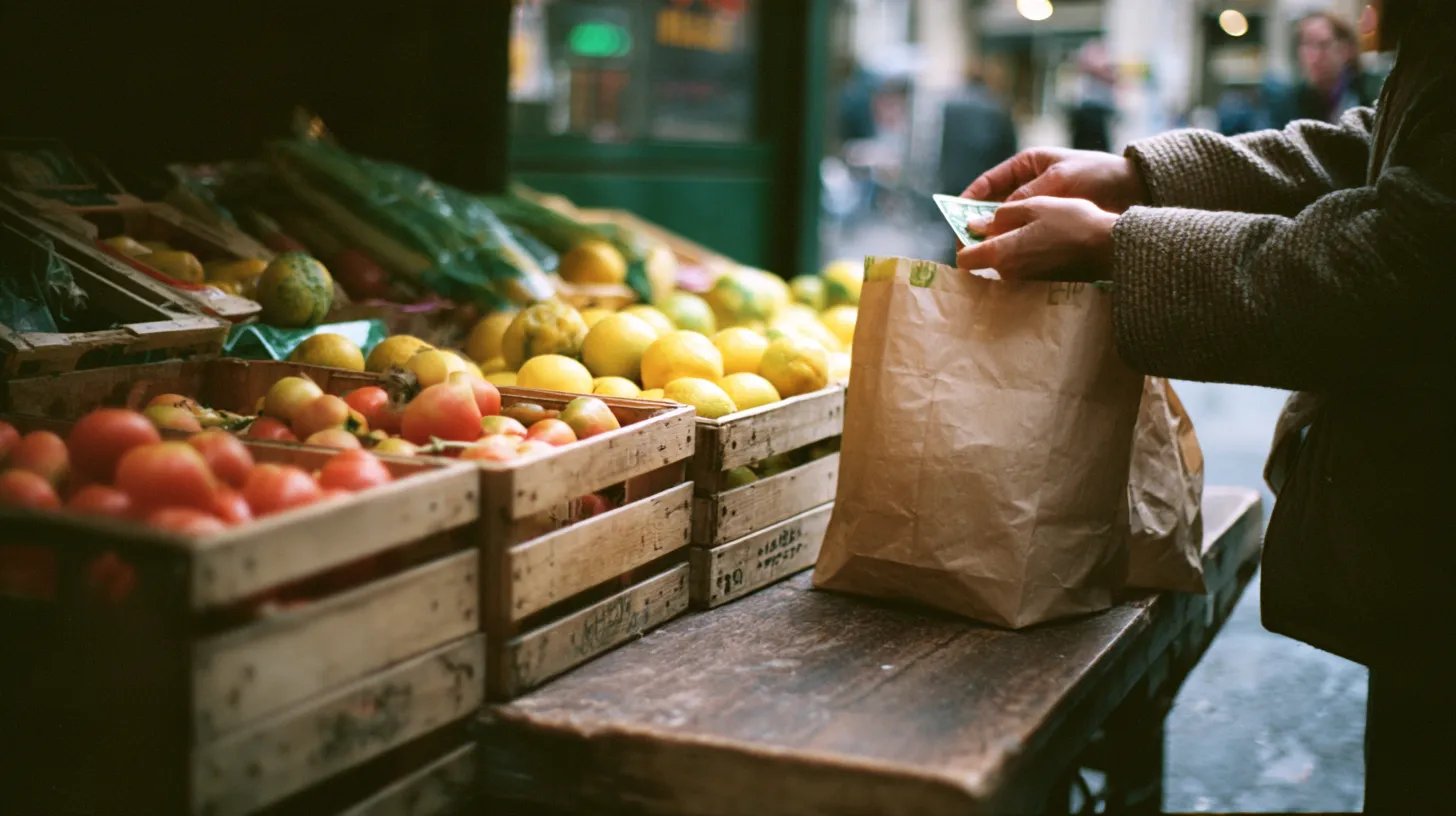
How much money you need to live in Italy
There is no single number. ISTAT, Italy's national statistics institute, puts average household spending at €2,782 a month in 2025. The median was €2,338, so most households spend less than the average.
Household size changes the figure:
| Household type (2025) | Average monthly spending |
|---|---|
| One person | €2,070 |
| Couple with two children | €3,618 |
| Household headed by a retiree | €2,602 |
| All households | €2,782 |
These are what residents spend, and only 18.1% of Italian households rent. Asking rents in large cities, shown below, sit well above the €438 a month that renting households pay on average. The sections below take each cost in turn, with its source and date.
If you are applying for a visa, the visa sets its own minimum income, separate from what living costs. The elective residence visa guide covers that requirement.
What households spend in each part of Italy
ISTAT's 2025 figures show a wide spread by area:
| Area | Average monthly spending (2025) |
|---|---|
| Northeast | €3,087 |
| Center | €3,052 |
| Northwest | €2,974 |
| Islands | €2,338 |
| South | €2,215 |
By region, spending ran from €3,444 a month in Trentino-Alto Adige to €1,975 in Puglia. Households in the Northeast spent 39.3% more than those in the South.
City size matters less than region. Households in the central cities of metropolitan areas spent €2,991 a month. Those in towns of up to 50,000 people spent €2,704, about 9.6% less.
ISTAT notes that households in the South and Islands generally have less money available. Part of the gap reflects lower incomes.
Rent: the cost that varies most
The property portal Idealista publishes average asking rents from its listings. In its third-quarter 2026 report, the national average was €14.6 per m² a month, up 1.8% on a year earlier.
€/m² per month
Average asking rent in listings for each city. National average: €14.6 per m². Holiday and seasonal rentals are excluded.
Source: Idealista, third-quarter 2026 rent report (published October 1, 2026)
At those averages, a 70 m² apartment would list at about €1,570 a month in Milan and €1,345 in Rome. In Turin it would be about €945, and in Reggio Calabria about €450. The cheapest provincial capital in the report was Caltanissetta, at €4.8 per m².
Rents are still rising in some cities. In the third quarter of 2026, Genoa rose 7.3% and Turin 5.6%, while Naples slipped 0.4%.
ISTAT's figure for rent actually paid is much lower: €438 a month on average in 2025. In the central cities of metropolitan areas it was €480. That averages every renting household. Idealista's figures are asking prices on current listings, which is closer to what you will be quoted as a new tenant.
For city detail, see the guides to the cost of living in Rome, Milan and Florence. For lower-cost areas, see the cheapest places to live in Italy.
Electricity and gas in 2026
Energy is the cost that moved most in 2026. ISTAT reports that consumer prices rose 4.2% in the year to September 2026, with energy goods up 22.6%.
ARERA, Italy's energy regulator, sets the prices paid by "vulnerable" customers in its protected services. They make a useful benchmark:
- Electricity: from October 1, 2026, 43.43 cents per kWh, taxes included, for a typical customer using 2,000 kWh a year on a 3 kW supply. ARERA puts that customer's bill 37.3% above the previous quarter.
- Electricity, full year: ARERA puts that customer's spending at €665.38 for 2026, about €55 a month.
- Gas: for September 2026, 162.02 cents per cubic meter, up 12.7% on August. ARERA's typical household uses 1,100 cubic meters a year.
At September's gas price, 1,100 cubic meters would cost about €1,780 over a year, roughly €150 a month. The regulated gas price changes monthly with the wholesale market, so treat this as a snapshot.
Who pays these regulated prices is narrow. ARERA counts as vulnerable anyone over 75, people receiving the social bonus (bonus sociale), people with a recognized disability and a few other groups. Most other households buy on the mercato libero (free market) from a supplier of their choice. ARERA's transitional electricity service for non-vulnerable homes that never chose a supplier ends on March 31, 2027.
To compare free-market offers, ARERA runs the Portale Offerte (ilportaleofferte.it), free and independent. You enter your town, annual consumption in kWh and supply power in kW, and it ranks offers by estimated yearly cost. Before you sign, the supplier must give you a Scheda Sintetica (summary sheet) with the estimated annual cost.
Groceries and eating out
Italian households spent €552 a month on food and non-alcoholic drinks in 2025, up 3.6% on 2024. That is 19.8% of total spending.
The share varies by area. Food took 25.4% of household spending in the South and 17.7% in the Northwest. Restaurants and accommodation took 5.9% nationally and 6.9% in the Northwest.
Food prices are climbing in 2026. In September, ISTAT measured unprocessed food prices up 5.5% on a year earlier. Its "shopping cart" index of food, household and personal care goods rose 1.5%.
Getting around: monthly transit passes
Monthly and annual passes, at prices as of October 2026:
| City | Monthly pass | Annual pass | Source |
|---|---|---|---|
| Rome | €35 | €250 | Regione Lazio Metrebus tariff, updated August 10, 2026 |
| Milan | €39 | €330 | ATM |
| Florence | €42.20 | €342.80 | Autolinee Toscane, from August 1, 2026 |
Milan's urban pass stops at the city limits, and Rome's covers the territory of Roma Capitale.
Discounts are worth checking. Milan sells a €22 monthly pass to students and workers under 27, and a €32.50 pass to anyone 65 or older. Rome's annual pass for people over 65 costs €120 to €150. Florence has an ISEE (income-based) monthly pass at €31.
ISTAT puts transport, as a whole, at 10.6% of household spending in 2025.
Health care costs
What you pay depends on why you are in Italy. By law, some foreign residents must enroll in the Servizio Sanitario Nazionale (SSN, national health service) on the same terms as Italians. This covers people who work and holders of work or family permits.
Other legal residents must either buy health insurance valid in Italy, from an Italian or foreign insurer, or enroll voluntarily in the SSN. ASL Sassari, a local health authority, lists elective residence among the permits that allow voluntary enrollment.
How the voluntary contribution works:
- The minimum is €2,000 a year, set by law since January 1, 2024.
- The amount depends on income. ASL Sassari applies 7.5% on income up to €20,658.28 and 4% on income above that, up to €51,645.69. The law counts the prior year's income in Italy and abroad.
- The formula tops out at about €2,789 a year, roughly €167 to €232 a month across the range.
- Enrollment also covers dependent family members, according to the law.
- Students and au pairs have lower minimums: €700 and €1,200 a year.
The law allows the minimums to be adjusted each year by ministerial decree. Confirm the current figure with your ASL (azienda sanitaria locale, local health authority) before you pay.
For the insurance route, the private health insurance guide covers what to look for. Whatever the route, budget for some out-of-pocket care: ISTAT found that older couples spent €164 a month on health in 2025.
TARI and other local costs
TARI (tassa sui rifiuti, waste tax) pays for rubbish collection and disposal. Each comune (municipality) runs its own TARI. Turin, for example, approved its 2026 rates by city resolution and kept them unchanged.
Turin's rules show how the tax is calculated and billed:
- Size of the home. You pay on the walkable floor area. For standard residential units, the taxed area is never less than 80% of the area in the property register.
- People in the household. The count comes from the residence register automatically.
- Registration. Registering your residence at the anagrafe (registry office) also activates TARI. Otherwise you file within 90 days of moving in. Turin charges penalties on filings made after June 30 of the following year.
- Tenants. A landlord and tenant can agree to keep the TARI account in the landlord's name.
- Discounts. In 2026, Turin's ISEE discounts reach 50% for households with an ISEE of up to €10,000.
Other local items vary by building and lease, such as spese condominiali (building service charges). Ask what the rent includes before you compare listings.
Why costs differ: north and south, city and town
Three things drive most of the spread.
- Rent. Asking rents run from €25.6 per m² in Valle d'Aosta to €6.3 in Molise at regional level. Lombardy averages €18.9 and Calabria €6.9.
- Income and habits. Southern households spend a larger share on food, and northern households a larger share on restaurants and recreation. Part of this reflects lower incomes in the South.
- City size. Households in metropolitan centers spend more, but the gap with smaller towns was 9.6% in 2025, smaller than the gap between regions.
Transit varies less: a city pass costs €35 to €42.20 a month in the three cities above.
Monthly cost components with sources
This table lists components, not a full budget. It leaves out phone, internet, insurance, building charges and car costs, which vary too widely to state from one source.
| Item | Figure | Source and date |
|---|---|---|
| Rent, 70 m² at average asking rent | About €450 (Reggio Calabria) to €1,570 (Milan) | Idealista, Q3 2026 |
| Electricity, 2,000 kWh a year | About €55 a month (€665.38 a year) | ARERA reference, 2026 |
| Gas, 1,100 m³ a year | About €150 a month at September prices | ARERA reference, September 2026 |
| Food and non-alcoholic drinks, average household | €552 a month | ISTAT, 2025 |
| Monthly transit pass | €35 to €42.20 | Rome, Milan and Florence tariffs, 2026 |
| Voluntary SSN enrollment, where it applies | €2,000 to about €2,789 a year | Law and ASL Sassari |
| TARI | Set by each comune, by floor area and household size | Comune di Torino |
Common problems and fixes
Budgeting from short-term rental prices. Newcomers report high monthly quotes for furnished short stays. Idealista excludes holiday and seasonal rentals from its averages because they do not reflect the regular rental market. Budget your first weeks at short-stay rates, then compare long-term listings against the per-m² averages above.
Not knowing what the rent covers. Newcomers often ask whether a listed rent includes building charges, utilities or both. Ask the landlord to list rent, building charges and utilities separately in writing.
Heating bills that arrive higher than expected. Newcomers report gas bills above what they planned for. The regulated gas price rose 12.7% in one month in 2026. Ask for the last 12 months of bills before you sign, and compare offers on the Portale Offerte.
Paying for a full year of health cover. ASL Sassari states that voluntary enrollment runs from January 1 to December 31, cannot be split and is not backdated. If you arrive late in the year, ask your ASL how it applies this before you pay.
Missing the TARI filing. If you do not register residence right away, the 90-day filing window can pass. Late filings can bring penalties and interest. File with your comune, or register residence, soon after you move in.
Do you need help with this?
Most people can build a realistic budget from these sources on their own. It gets harder when you are comparing several cities at once, or when your visa application depends on showing the numbers.
Frequently asked questions
How much money do you need per month to live in Italy?
Italian households spent an average of €2,782 a month in 2025, and a single person €2,070, according to ISTAT. Your figure depends mostly on rent. In the third quarter of 2026, Idealista's average asking rent was €22.4 per m² a month in Milan and €6.4 in Reggio Calabria. Visas set their own minimum income, separately from living costs.
What is the cheapest part of Italy to live in?
In ISTAT's 2025 data, households spent least in Puglia (€1,975 a month) and Calabria (€2,042). In Idealista's third-quarter 2026 report, the cheapest regions for asking rents were Molise (€6.3 per m²), Basilicata (€6.6) and Calabria (€6.9). The cheapest provincial capital was Caltanissetta (€4.8).
How much is electricity in Italy in 2026?
ARERA's reference price for vulnerable customers is 43.43 cents per kWh, taxes included, from October 1, 2026. For a typical customer using 2,000 kWh a year, ARERA puts 2026 spending at €665.38. Households that are not classed as vulnerable choose a free-market offer and can compare them on ARERA's Portale Offerte.
Do foreigners pay for health care in Italy?
Foreign residents who work, or who hold work or family permits, enroll in the national health service on the same terms as Italians. Other residents, such as those on elective residence, either buy private insurance valid in Italy or enroll voluntarily. Voluntary enrollment costs at least €2,000 a year, based on income.
How much is a monthly public transport pass in Italy?
As of October 2026, a monthly pass costs €35 in Rome, €39 in Milan and €42.20 in Florence. Annual passes cost €250, €330 and €342.80. Discounts exist for younger and older riders and, in some cities, for lower incomes.
Why is the cost of living rising in Italy in 2026?
Mostly energy. ISTAT measured inflation at 4.2% in the year to September 2026, with energy goods up 22.6% and unprocessed food up 5.5%. ARERA attributes higher electricity prices to wholesale gas prices and international instability.
Related guides
mySoggiorno
Planning a move, not just a trip?
We handle your move, from legal counsel to your home and arrival, as one engagement. The fit check tells you in about three minutes whether a visa fits your situation.
Check your fit →3 minutes · free · a call if it fitsSources
- ISTAT: Le spese per i consumi delle famiglie, anno 2025
- ISTAT: Prezzi al consumo, settembre 2026 (final data)
- ARERA: Elettricità, Maggior Tutela +37.3% nel IV trimestre 2026 per i clienti vulnerabili (September 29, 2026)
- ARERA: Gas, valore della materia prima per settembre 2026 (October 2, 2026)
- ARERA: Fine del Servizio a Tutele Graduali il 31 marzo 2027 (October 12, 2026)
- Normattiva: D.Lgs. 286/1998, art. 34 (health care for foreign residents)
- ASL Sassari: Contributo per l'iscrizione volontaria al SSN (Law 213/2023)
- Regione Lazio: Sistema tariffario, Metrebus Roma (updated August 10, 2026)
- ATM Milano: Tipi di abbonamento
- Autolinee Toscane: Tariffe valide dal 1° agosto 2026
- Comune di Torino: TARI, domande frequenti
- Comune di Torino: Attivazione del servizio TARI per utenze domestiche
- Comune di Torino: Tari 2026, tariffe invariate (July 7, 2026)
- Idealista: Affitti in lieve aumento (0.5%) nel III trimestre 2026 (October 1, 2026)
Rules and office practices change. Every fact in this guide was checked against the sources above on October 24, 2026. This guide is general information, not legal or tax advice.